
UK Greyhound Racing Betting: The Legal Framework, How It Works, and What Punters Need to Know
 Available in US
UKGC regulation, bet types, odds explained, track guide, form analysis, and responsible gambling — the complete reference for UK greyhound bettors.
In This Guide
Greyhound Betting in Britain: What Makes It Different
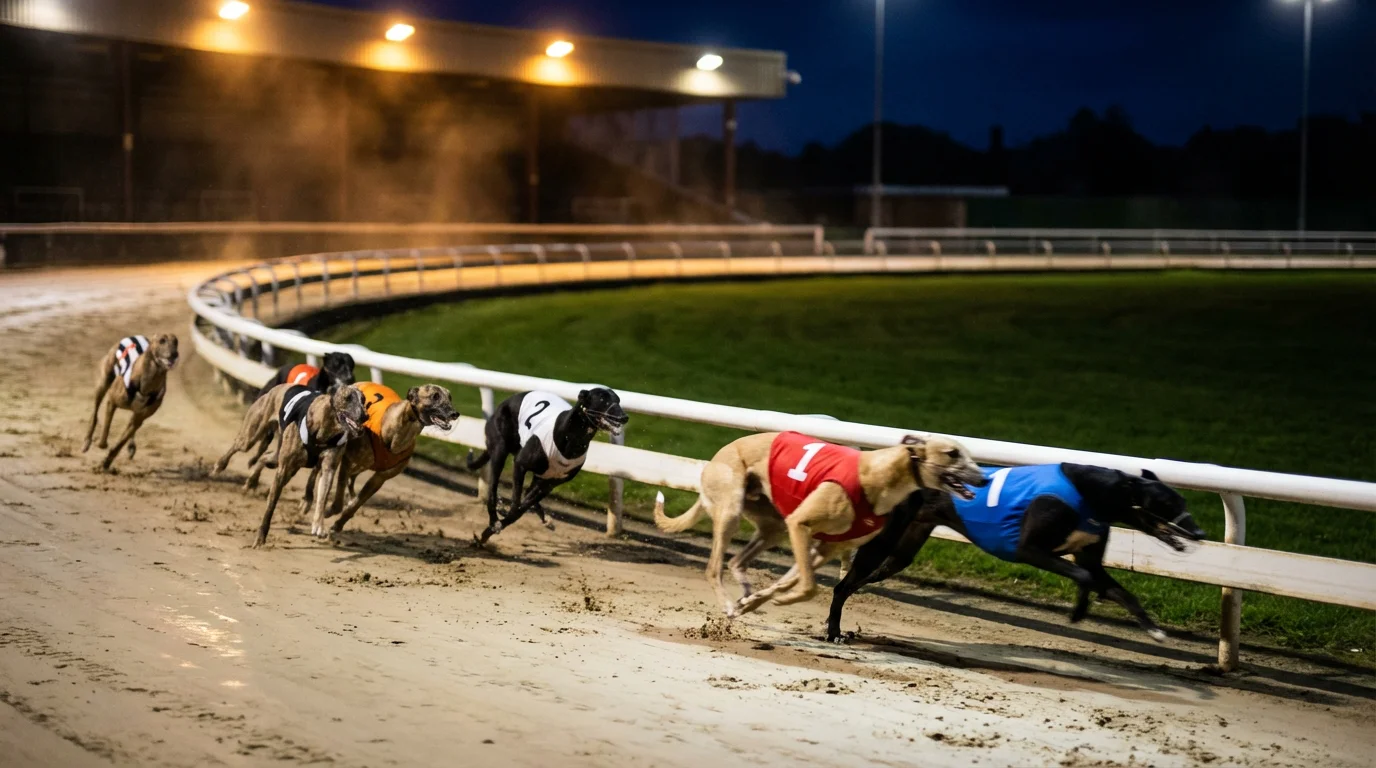
Greyhound racing isn't horse racing's poor relation — it's a fundamentally different betting proposition. Six dogs, a mechanical hare, an oval track, and roughly thirty seconds from traps to finish line. No jockeys making tactical decisions mid-race. No twenty-runner handicaps requiring half an hour of form study. The variables are fewer, the markets are thinner, and the turnover between races is measured in minutes rather than the half-hour gaps you'd find at Cheltenham or Ascot.
That compression creates a distinctive betting environment. A typical evening meeting at a GBGB-licensed track runs ten to fourteen races, each featuring a six-dog field. Where horse racing might offer a single competitive handicap worth studying per meeting, greyhound racing delivers a dozen opportunities in rapid succession. The punter who understands the sport's structure — its grading system, its trap biases, its form cycles — finds a market where bookmaker pricing is often less refined than in horse racing and where small analytical edges can compound across a volume of bets that no other racing discipline matches.
For UK bettors, greyhound racing also operates within a clearly defined legal framework. The Gambling Act 2005 governs all licensed betting activity. The Greyhound Board of Great Britain regulates the sport itself, licensing tracks and enforcing rules of racing. The UK Gambling Commission oversees the betting operators who take your money. These aren't abstract regulatory bodies — they determine which tracks you can legally bet at, what protections you have as a punter, and what standards of welfare and integrity apply to every race on the licensed circuit.
Key Fact — The GBGB currently licenses 18 greyhound stadiums across England and Wales. Each meeting typically features 10–14 races with 6-dog fields, producing over 70,000 individual races per year across the regulated circuit.
This guide covers the full scope of legal greyhound betting in Britain: the regulatory framework that makes it possible, the mechanics of how racing works, every bet type available to UK punters, how odds are formed and priced, where to bet safely, and the welfare debates that increasingly shape the sport's future. Whether you're placing your first greyhound bet or refining an approach built over years, the information here is structured to be both comprehensive and practically useful — not a sales pitch dressed as education.
The Legal Basis for Greyhound Racing Betting in the UK
Gambling Act 2005
Primary legislation governing all commercial betting in the UK, including greyhound racing.
GBGB Regulation
Sport-specific oversight: track licensing, rules of racing, integrity, and welfare enforcement.
UKGC Licensing
Operator regulation: bookmaker licensing, consumer protection, and market integrity.
Every legal greyhound bet placed in Britain passes through a regulatory framework that traces back to 1960. The current structure has evolved considerably since the Betting and Gaming Act first brought off-course betting out of the shadows, but the principle remains the same: greyhound racing betting is a lawful, regulated activity — provided it takes place through licensed channels on licensed tracks.
The Gambling Act 2005 and How It Applies to Greyhound Betting
The Gambling Act 2005 is the primary piece of legislation governing commercial gambling in the United Kingdom. It replaced the patchwork of earlier statutes — including the 1960 Act that first legalised betting shops — with a consolidated framework administered by the UK Gambling Commission. Under this Act, any operator offering betting services to UK consumers must hold an appropriate licence from the Commission. That applies to high-street bookmakers, online betting sites, on-course bookmakers at greyhound stadiums, and tote pool operators alike.
The Act establishes three licensing objectives: keeping gambling crime-free, ensuring gambling is conducted fairly and openly, and protecting children and vulnerable people from harm. These objectives shape everything from the age verification checks you encounter when opening an online account to the stewards' procedures that govern race-day integrity at the track. For punters, the practical takeaway is straightforward: if a bookmaker is UKGC-licensed, the legal infrastructure exists to protect your funds and your rights. If it isn't, you're outside the regulated system entirely.
GBGB Licensing and Track Standards
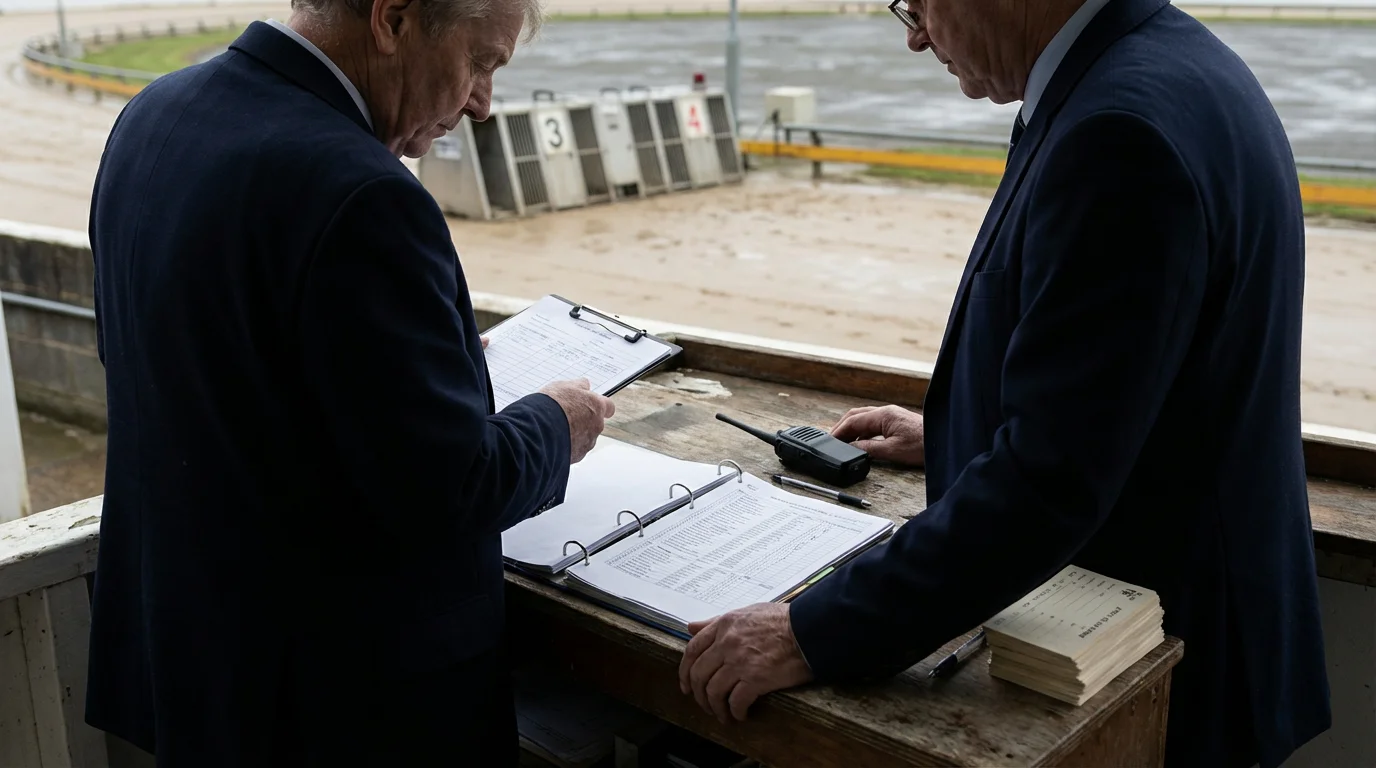
The GBGB operates as the self-regulatory body for greyhound racing in Great Britain. It licenses tracks, registers trainers and owners, employs racing officials, and enforces the Rules of Racing — the sport-specific rulebook that governs everything from trap draws and grading to doping controls and kennel standards. As of the 2026 racing season, the GBGB licenses 18 stadiums across England and Wales, down from over sixty at the sport's mid-twentieth-century peak.
A GBGB-licensed track is one where the integrity of results is formally overseen: official timekeepers, veterinary officers, stipendiary stewards, and drug-testing protocols are all mandatory. For bettors, this distinction matters. Betting on a GBGB-licensed meeting means the race has been conducted under a transparent, enforceable framework. Betting on an unlicensed — sometimes called "flapper" — track carries none of those assurances.
UKGC Operator Requirements for Greyhound Markets
The Gambling Commission doesn't regulate the dogs; it regulates the money. Every bookmaker offering greyhound markets to UK customers must hold a UKGC operating licence, comply with the Licence Conditions and Codes of Practice, and submit to ongoing supervision. This includes obligations around customer fund protection, anti-money-laundering procedures, responsible gambling tools, and fair terms for settling bets.
For greyhound bettors specifically, UKGC regulation means that non-runner deductions, void race rules, and payout timelines follow standardised frameworks. Licensed operators must also participate in alternative dispute resolution schemes, giving punters a formal route to challenge disputed outcomes. The Commission's public register allows anyone to verify whether a bookmaker holds a valid licence before depositing a penny.
How Greyhound Racing Works: Structure, Grades, and Race Types
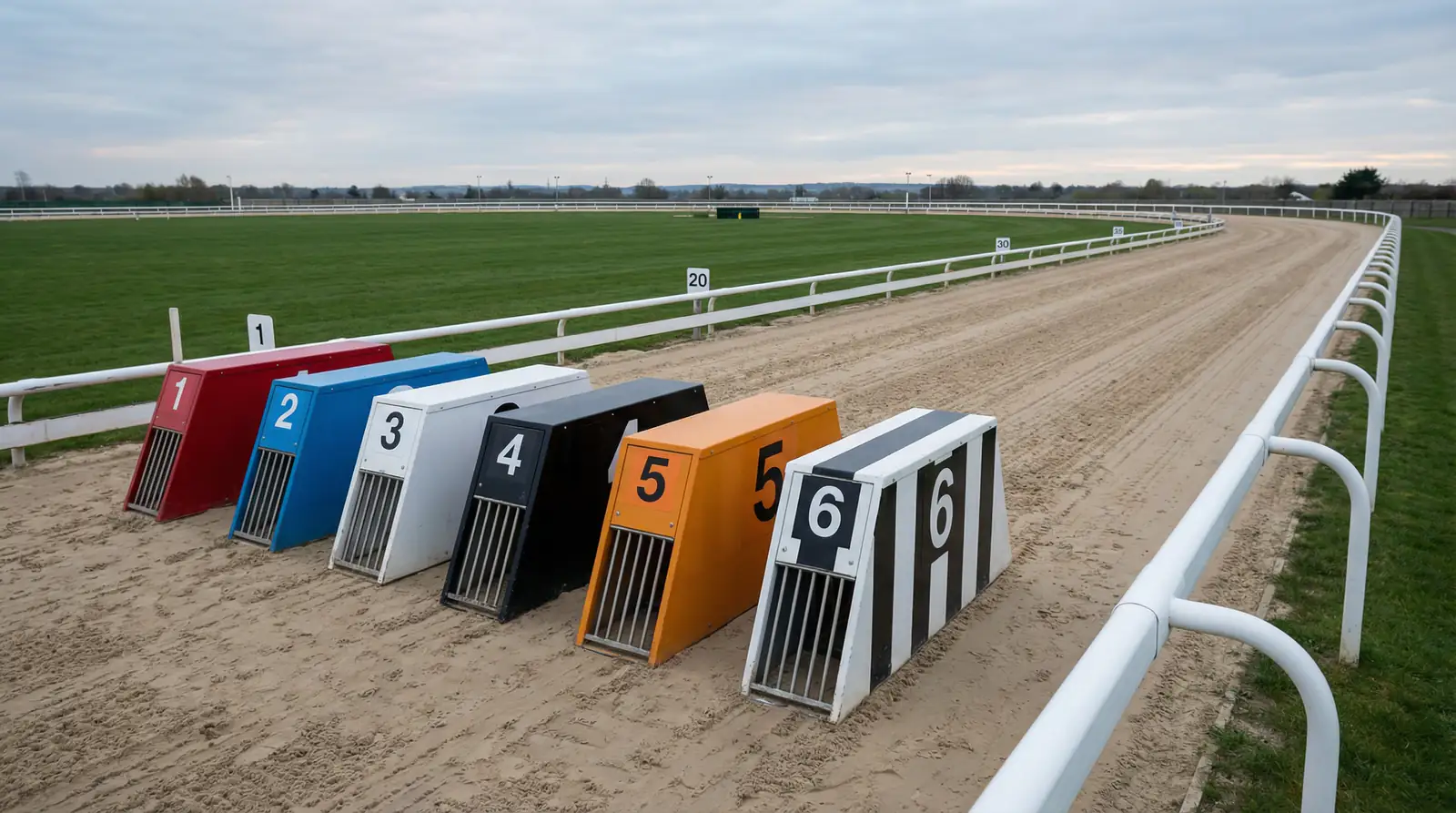
Six traps, one bend, thirty seconds — but the variables behind that simplicity are what separate informed punters from the rest. Understanding how greyhound racing is structured, how dogs are classified, and what distinguishes one race type from another is foundational knowledge for any serious bettor. The sport's mechanical simplicity is deceptive; the system underneath it is more layered than it appears at first glance.
Distances, Bends, and Track Configurations
UK greyhound tracks are oval circuits, but they vary significantly in circumference, bend radii, and straight lengths. Standard racing distances range from approximately 210 metres for sprint races to over 700 metres for marathon events, though the most commonly raced middle distance falls between 450 and 500 metres — typically involving four bends. Sprint races cover one or two bends; stayers' events can extend to six or more.
Track configuration matters because it directly influences which running styles succeed. Tight tracks with sharp bends — like Romford at 350 metres — favour early-pace dogs that can reach the first bend in front and avoid trouble. Larger, more galloping tracks give closers a better chance to find space and finish strongly. The distance from the traps to the first bend is the single most important geometric variable: a short run to a tight bend amplifies inside-trap advantage and penalises wide runners. A longer run gives the field time to sort itself out before the first turn.
The Grading System: A1 to A12
Graded race — a race where dogs are classified by ability, from A1 at the highest standard down to A12 at the lowest, and compete within their grade.
The grading system is the core classification mechanism in British greyhound racing. Each GBGB-licensed track operates its own grading ladder, managed by a resident grader who assesses dogs based on recent performance — primarily finishing times and positions. A dog that wins a race or posts a time significantly above its grade will be promoted; one that consistently finishes in the rear may be dropped. The process is continuous, meaning a dog's grade can change from week to week.
Grades are track-specific. An A4 dog at Towcester might not be equivalent in ability to an A4 dog at Romford, because grading reflects the competitive population at each track. This is a critical point for bettors: when a dog transfers from one track to another, its previous grade doesn't automatically translate. The new track's grader will assess it afresh, sometimes placing it in a grade that seems mismatched compared to its recent form — and that mismatch is where value bets frequently emerge.
Open Races vs Graded Races
Open races sit above the grading ladder entirely. They're unrestricted by grade, inviting the best dogs regardless of classification. Category One events — including the English Greyhound Derby, the St Leger, and the Oaks — are the pinnacle of the open-race calendar and attract the strongest fields in British greyhound racing. Category Two and Three events are significant in their own right, drawing regional or nationally competitive entries.
From a betting perspective, open races present a different analytical challenge. In a standard graded race, the field is theoretically matched — all dogs are of roughly equivalent ability. Open races bring together dogs of potentially very different calibre, which can make the form analysis either simpler, if one runner is clearly superior, or more complex, if the quality is deep and the draw becomes decisive. The ante-post markets for major open competitions — particularly the English Greyhound Derby at Towcester, which in the 2026 calendar remains the sport's flagship event — are among the most actively traded in greyhound betting.
Types of Bets You Can Place on Greyhound Racing
The bet slip for a greyhound race looks deceptively simple. Six numbered runners, a set of odds beside each, and a box for your stake. But behind that simplicity sits a range of bet types that span from the straightforward to the genuinely complex — each with its own risk profile, payout structure, and strategic application. Understanding all of them means knowing which tool to reach for in which situation.
Win and Each-Way Bets
A win bet is the simplest wager in greyhound racing: pick the dog that crosses the line first. Your return is your stake multiplied by the odds. If you back Trap 3 at 4/1 for £10, a winning result pays £50 — your £10 stake returned plus £40 profit. If the dog finishes anywhere other than first, you lose your stake. No ambiguity, no partial returns.
Win Bet Example
Trap 3 — Odds: 4/1 — Stake: £10 — Return if wins: £50 (£40 profit + £10 stake)
Each-way betting splits your stake into two equal parts: a win bet and a place bet. In a standard six-runner greyhound race, place terms typically pay first and second at one-quarter the odds. So a £10 each-way bet at 4/1 costs £20 total — £10 on the win and £10 on the place. If your dog wins, you collect both the win payout (£50) and the place payout (£10 at 1/1, which is £20). If it finishes second, you lose the £10 win stake but collect the place return. Each-way betting offers a cushion, but that cushion costs double the headline stake — a trade-off that's worth calculating rather than assuming.
In races reduced to five runners through withdrawals, place terms often change: some bookmakers pay only the winner for place purposes, effectively neutering the each-way value. Always check the terms before committing, because a non-runner that reduces the field from six to five can fundamentally change the arithmetic of your bet.
Interactive Tool
Each-Way Total Return, and Overround Gap Calculator
Combine the guide's own win and place payouts into a total return, and calculate the exact overround gap between greyhound and horse racing markets.
Total Return If Wins
-
-
Win Payout
-
Place Payout
-
Net Profit
-
What this guide gives as two separate figures: "you collect both the win payout (£50) and the place payout (£10 at 1/1, which is £20)." The combined total is never stated — it's £70 total return, a net profit of £50 above the £20 outlay.
Overround Gap
-
-
Greyhound Midpoint
-
Horse Racing Midpoint
-
Range of Gap
-
What this guide gives as two separate ranges: "A competitive greyhound market might carry an overround of 112–118%, compared to 120–140% on a twenty-runner horse racing handicap." The gap between them is never calculated — using midpoints, it's 15 percentage points.
Forecast and Tricast Bets
The straight forecast asks you to predict the first and second finishers in the exact order. It's where greyhound betting starts to reward genuine knowledge — and where the payouts reflect the difficulty. In a six-dog field, there are 30 possible first-second combinations. Getting both right in order demands that you correctly assess not just the likely winner but the form, draw, and running style of the probable runner-up.
A reverse forecast covers both possible orders of your two selections, doubling the cost but removing the need to pick the precise finishing sequence. Combination forecasts extend this to three or more selections, covering all possible first-second pairings between them. The cost escalates quickly: a combination forecast across three dogs requires six individual forecast bets.
Tricast bets raise the bar further — predict the first, second, and third finishers in exact order. In a six-dog race, that's one correct sequence from 120 possible permutations. The payouts can be substantial, but the strike rate is correspondingly low. Combination tricasts, covering all possible orderings of your selected trio, cost six times a single tricast stake. The maths is unforgiving, but a well-judged tricast on a race with a clear pace map can return multiples of what a simple win bet on the same favourite would produce.
Tote and Pool Betting
Pool betting disconnects you from fixed odds — your payout depends on what everyone else did. All stakes on a particular bet type enter a shared pool. The tote operator deducts a percentage (the takeout, typically 15–30%), and the remainder is divided among winning ticket holders. If the pool is large and few people backed the winner, the dividend can exceed the fixed-odds starting price. If the public piled onto the favourite, the tote dividend for that dog will likely be worse than the bookmaker's price.
Tote Forecast Payout
Trap 2 finishes first, Trap 5 finishes second.
The Computer Straight Forecast dividend is declared at £18.40 per £1 unit.
Your £2 stake returns: £2 x £18.40 = £36.80.
Tote win, place, exacta (forecast), and trifecta (tricast) pools operate at most GBGB tracks. Multi-race products — the jackpot (pick the winner in every race of a nominated sequence) and the placepot (pick a placed dog in each leg) — offer the potential for large payouts from small stakes, though the difficulty is proportionally steep. The jackpot in particular is a low-probability, high-reward proposition that can roll over when unsolved, creating occasionally compelling pool sizes.
Accumulators and Multiples
An accumulator chains selections across separate races into a single bet. Returns from the first winning leg roll into the second, then the third, and so on — compounding the potential payout but requiring every selection to win. A four-fold accumulator backing four dogs at 3/1 each returns £256 from a £1 stake if all four win. If any one loses, the entire bet is dead.
Doubles, trebles, and four-folds are the most common multiple structures. Full-cover bets — such as a Trixie (three selections: three doubles plus a treble) or a Lucky 15 (four selections: four singles, six doubles, four trebles, and a four-fold) — provide partial returns when not all selections win, at the cost of a higher total stake. These structures suit punters who want accumulator-style returns but recognise that backing four consecutive winners at realistic odds is a rare event.
The rapid turnover of greyhound meetings — races every ten to fifteen minutes across multiple tracks — makes greyhound accumulators particularly tempting and particularly dangerous. The convenience of building a multi-leg bet across an evening card creates the illusion of a structured approach when it's often a route to chasing losses across escalating stakes. Accumulators work best as occasional, small-stake bets on carefully selected races, not as a default betting method.
Understanding Greyhound Odds and Pricing
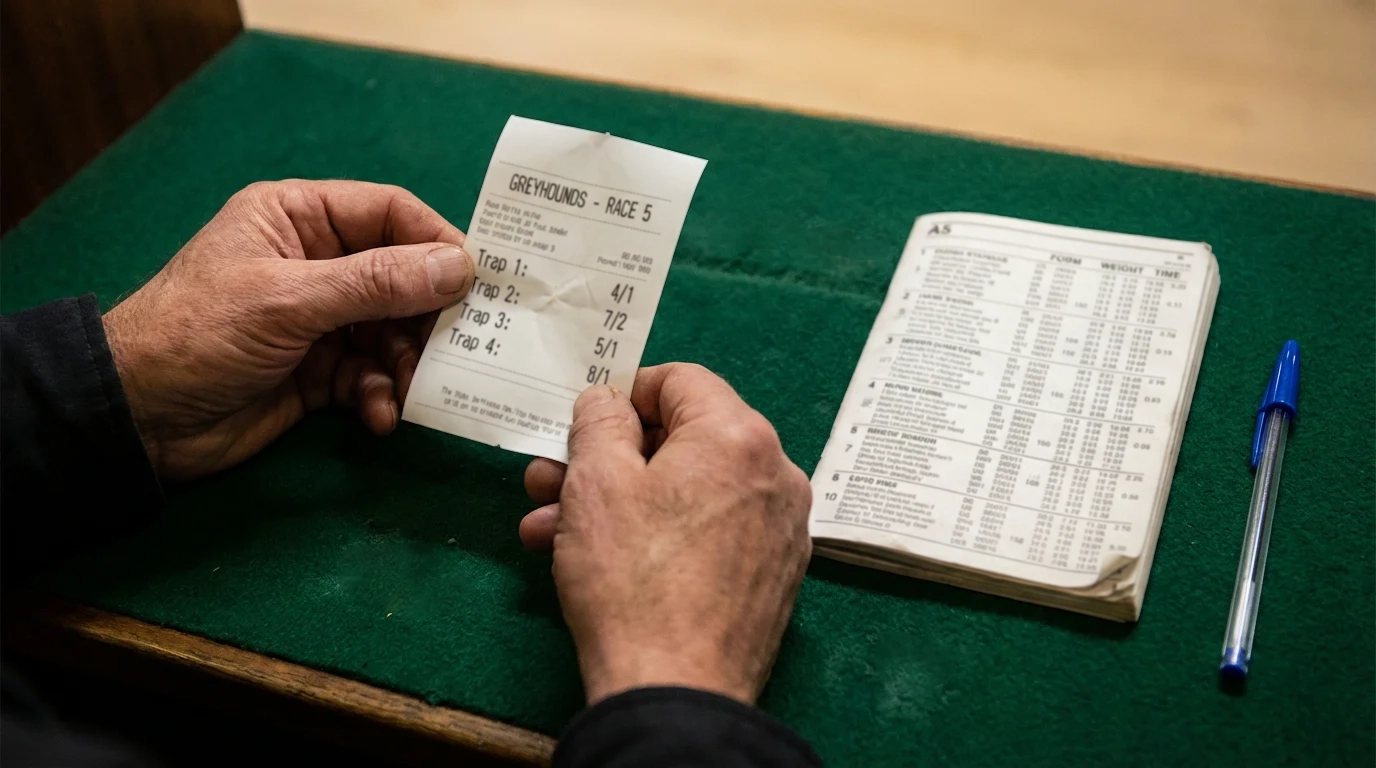
Odds on a greyhound race mean something slightly different from a twenty-runner handicap at Cheltenham. In a six-dog field, the mathematical range is tighter, the favourite wins more frequently as a proportion of races, and the market moves faster because there's less information to process and less time to process it. Understanding how greyhound odds are formatted, what drives them, and where the pricing advantages lie is directly connected to long-term profitability.
Fractional vs Decimal Odds in Practice
Fractional Odds: 4/1
Profit of £4 for every £1 staked. Total return on a £10 bet: £50 (£40 profit + £10 stake). Traditional UK format, standard at track bookmakers and most high-street shops.
Decimal Odds: 5.00
Total return of £5 for every £1 staked (includes stake). Same £10 bet returns: £50. Default on betting exchanges and widely used in online platforms.
Both formats express the same information differently. Fractional odds show profit relative to stake; decimal odds show total return per unit staked. The practical difference matters most when comparing prices across platforms. A bookmaker quoting 11/4 and an exchange showing 3.75 are offering the same price — but the fractional notation is less immediately intuitive for quick comparison. Most experienced punters settle on whichever format they find fastest to process, then apply it consistently. If you're comparing across multiple bookmakers and an exchange simultaneously, decimal is generally quicker for arithmetic.
The bookmaker's overround — the total implied probability of all runners summing to more than 100% — is typically lower on six-dog greyhound races than on large horse racing fields. A competitive greyhound market might carry an overround of 112–118%, compared to 120–140% on a twenty-runner horse racing handicap. That smaller margin doesn't make the bookmaker generous; it simply reflects the structural reality of pricing a smaller field. For bettors, it means the value gap between the "true" probability and the bookmaker's odds is narrower, which makes selective betting and odds comparison between operators proportionally more important.
Starting Price, Early Price, and Best Odds Guaranteed
The starting price — the official odds at the moment the traps open — is determined by the on-course market at GBGB tracks. If you bet at SP, your payout reflects whatever price the market settles at by race time. Early prices, available from the morning of a meeting through bookmaker websites and apps, let you lock in odds before the market moves. If your dog's price shortens during the day as money arrives, you've captured value at the higher number. If it drifts, you're stuck with the worse price.
Best Odds Guaranteed, offered by most major UK bookmakers on qualifying greyhound races, resolves this dilemma. BOG means you take the early price but are paid at SP if the starting price turns out to be higher. It's a genuine concession to the punter and one of the few promotions that delivers consistent, measurable value. Not all operators extend BOG to all greyhound meetings — some restrict it to evening fixtures or specific tracks — so check the terms before assuming you're covered. But where BOG applies, taking an early price becomes a dominant strategy: you get the best of both worlds, and the bookmaker absorbs the risk of the market moving against its opening number.
Reading the Race Card and Analysing Form
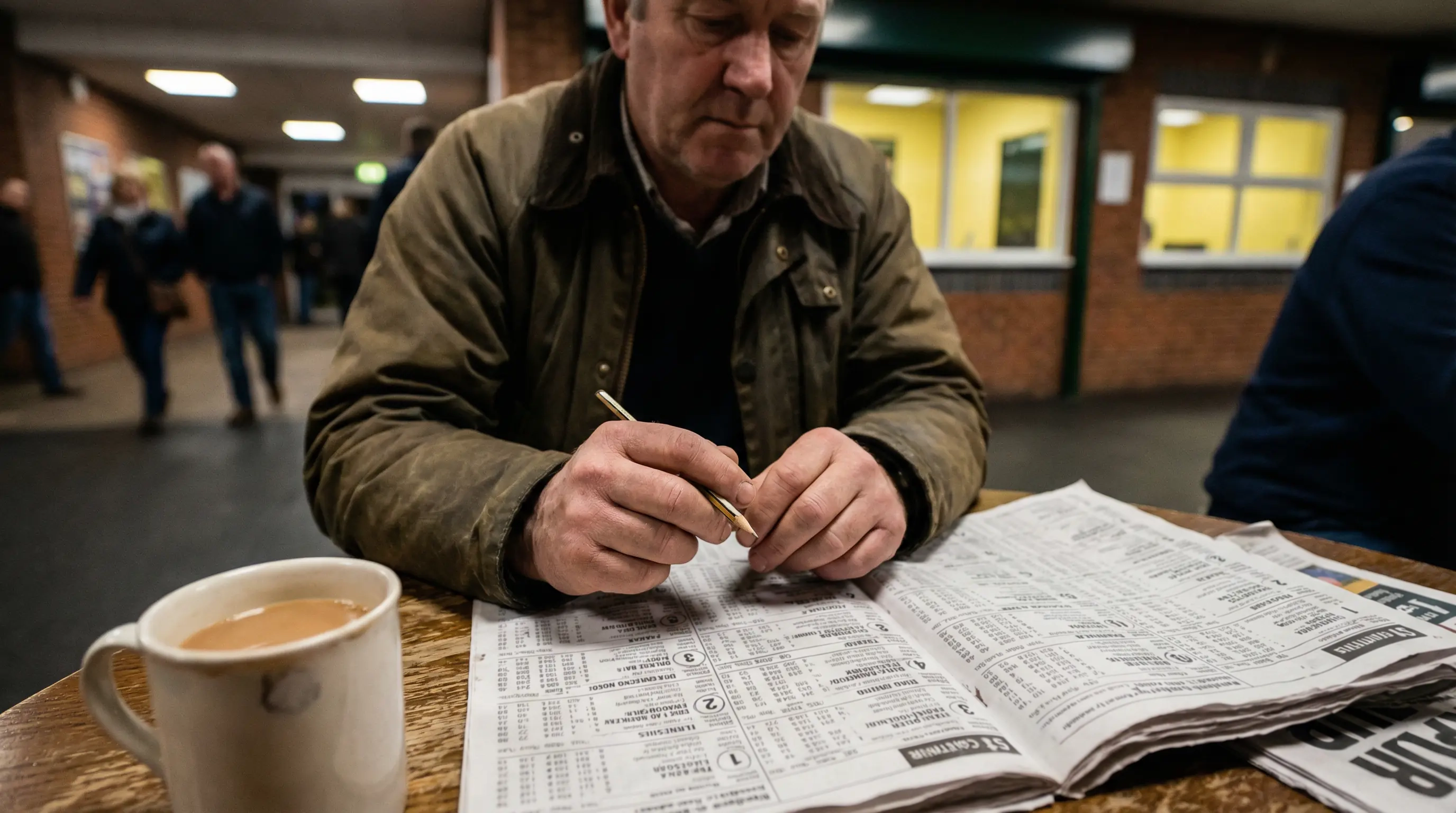
A race card tells you almost everything — if you know where to look. The standard UK greyhound race card compresses a dog's recent history into a few columns of abbreviated data. Learning to read that data fluently, rather than skimming it for a name you recognise or a trap colour you like, is the single most impactful skill a greyhound bettor can develop.
What Every Column on the Race Card Means
The essential columns on a GBGB race card include the trap number and colour, the dog's name, the trainer, recent form figures, weight, the distance and grade of each recent run, finishing times, and race comments. Form figures appear as a sequence of numbers — typically the last six finishing positions — reading left to right from oldest to most recent. A form line of 2-1-3-1-1-2 tells you the dog has been competitive across its recent outings, consistently finishing in the top three.
Finishing times are expressed in seconds to two decimal places — a dog posting 29.42 over 480 metres at a given track. That number only becomes useful when set against the track standard for that distance and the times of other dogs in the same race or grade. Race comments, appended to each run, provide critical context that bare numbers miss: "baulked first bend" explains a poor finishing time far more completely than the position alone; "led throughout" confirms a front-running style that may repeat if the draw is favourable.
Weight is recorded in kilograms and fluctuates naturally between outings. Significant weight changes — more than a kilogram up or down — can indicate a dog coming into peak condition or, conversely, carrying an issue the connections haven't disclosed. Weight trends across several runs are more informative than a single reading.
Trap Draw and Track Bias
Trap 1 at Towcester has a win rate of approximately 20% — three to four percentage points above the "random" expectation of 16.7% in a six-dog field.
Every UK greyhound track displays measurable trap biases. These aren't random; they're structural consequences of the track's geometry — the distance from traps to the first bend, the radius of the turns, and the position of the running rail. Inside traps consistently outperform at tracks with short runs to tight bends, because the dog in trap one has the shortest path to the rail and reaches the bend first, avoiding the crowding that dogs drawn wide must navigate.
Track-specific bias data is available from results databases and form analysis providers. Punters who track trap win percentages at their preferred tracks develop an edge that casual bettors — who treat the draw as cosmetic information — systematically lack. A two-to-four-percentage-point advantage on a given trap, sustained over hundreds of races, compounds meaningfully when factored into selection decisions.
Running Style: Early Pace vs Closers
Dogs generally fall into three running-style categories: front-runners that break fast from the traps and lead to the first bend, mid-pack runners that settle in the early stages and try to pick off tiring leaders, and closers that rely on late speed to overhaul the field in the final straight. The race card's comments and sectional times — the time to the first bend, where available — reveal a dog's style more reliably than its overall finishing time.
The interaction of running styles within a race is what makes greyhound form analysis genuinely interesting. A race loaded with front-runners from inside traps can create carnage at the first bend: dogs competing for the rail collide, check, and create gaps for closers drawn wide. Conversely, a single front-runner in an otherwise pace-light field can establish a clear lead, avoid trouble entirely, and win by widening margins on every bend. Mapping the likely pace shape of a race before looking at odds is the analytical step that most recreational punters skip — and it's the step that most consistently identifies false prices.
Where to Bet: Licensed UK Greyhound Tracks and Online Options
There are two ways to bet on greyhound racing in Britain, and neither requires travelling further than your sofa — though one of them is considerably better for the experience. The split between on-course and online betting is more than a matter of convenience; it affects the odds you receive, the bet types available, and the information you can access before the traps open.
On-Course Betting: Tote Windows and Track Bookmakers
Attending a GBGB-licensed meeting gives you access to on-course bookmakers and the track's tote operation. On-course bookmakers set their own prices, adjusted in real time based on the money they're taking. The tote windows offer pool betting into the on-course pools, with dividends declared after each race. The atmosphere at a live meeting — the parade ring, the noise of the traps, the thirty-second burst of racing — adds a dimension that no screen replicates, and trackside punters can assess how dogs look physically in the pre-race parade, a form of intelligence that simply isn't available online.
On-course betting also means cash transactions: no deposit delays, no withdrawal processing. But the trade-off is access. With 18 licensed stadiums — the vast majority in England and one in Wales — and none in Scotland, reaching a live meeting involves geography and scheduling that online betting eliminates entirely. Most tracks concentrate their programmes on evening and weekend fixtures, with BAGS afternoon meetings filling the daytime schedule for broadcast to betting shops and online platforms.
Online Betting: Bookmaker Apps and Live Streaming
Online bookmakers provide the broadest access to greyhound markets. Major UKGC-licensed operators — including bet365, Paddy Power, Betfair, William Hill, Coral, and Ladbrokes — cover virtually all GBGB meetings, offer live streaming through SIS broadcasts, and provide race cards with integrated form data. Betting exchanges, particularly Betfair and Smarkets, add the ability to lay selections and trade positions before the off.
Live streaming transforms online greyhound betting from a results-based activity into a genuinely visual one. Watching races through bookmaker apps provides the same form-building intelligence that trackside attendance offers — how a dog broke, how it handled the bends, whether the result flattered or concealed its true performance. A funded bookmaker account is typically all that's required to access streams, making it a free benefit for active bettors.
Only bet with UKGC-licensed operators. The Gambling Commission's public register lets you verify any bookmaker's licence status before depositing.
Five Checks Before You Place a Greyhound Bet
Before any money leaves your account, run through this. These five checks take less than five minutes and cover the foundational due diligence that separates a considered bet from a casual punt. None of them require specialist knowledge; all of them require the discipline to actually perform them rather than skipping straight to the bet slip.
Pre-Bet Checklist
- Check the dog's last three results at this distance — finishing positions, times, and race comments. Consistent form at the relevant distance is the minimum threshold for a selection.
- Look for trap bias data at the track — some traps win significantly more often than random chance predicts. Align your selection with the bias, not against it.
- Confirm the race is on a GBGB-licensed track — only licensed meetings carry the regulatory protections and integrity oversight that legal betting requires.
- Verify your bookmaker holds a UKGC licence — the public register takes thirty seconds to check and protects your funds and your rights.
- Set your stake limit before browsing odds — deciding how much to risk after you've seen an attractive price leads to staking decisions driven by excitement rather than strategy.
These aren't aspirational goals. They're practical habits. The punter who performs these checks on every bet builds a selection discipline that, over time, filters out the weakest wagers before they cost money. The one who skips them is relying on instinct, and instinct — in a market priced by professionals — doesn't carry positive expected value.
Greyhound Racing Welfare and the Ban Debate
The question isn't whether greyhound racing faces opposition — it's whether the industry's response is enough. The practical checks in the previous section assume a functioning, regulated sport. But the regulatory and political landscape beneath those checks is shifting. Welfare has moved from the periphery of the greyhound racing conversation to its centre, driven by legislative action in the devolved nations, sustained campaigning by animal welfare organisations, and a shifting public tolerance for sports that involve animal injury risk. For bettors, the welfare debate isn't abstract: it directly affects the sport's future, the number of tracks operating, and the regulatory conditions under which betting is offered.
The 2010 Welfare Regulations and What They Changed
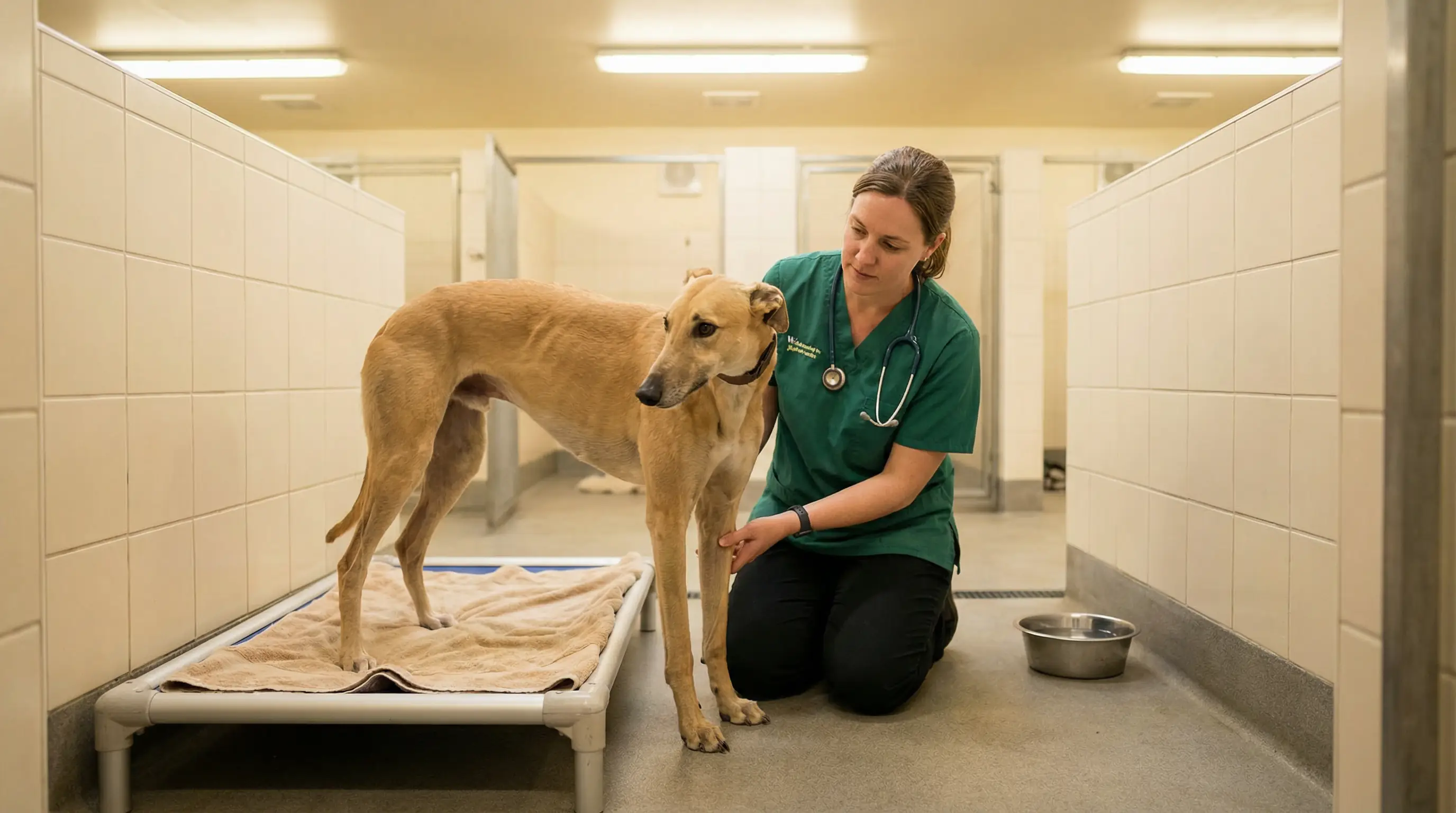
The Welfare of Racing Greyhounds Regulations 2010 established the first statutory welfare framework for the sport in England. Before these regulations, welfare standards existed as voluntary commitments enforced by the GBGB but without the force of law. The 2010 Regulations changed that by requiring GBGB-licensed tracks to meet specified standards for kennel accommodation, veterinary provision, injury recording, and the traceability of dogs through their racing careers and into retirement.
The regulations mandate independent inspections of licensed tracks, veterinary attendance at every meeting, and the maintenance of records that track each dog from registration to retirement or rehoming. The GBGB's Injury and Retirement Data, published annually, provides aggregate statistics on injuries sustained during racing and the destinations of dogs leaving the sport. These transparency measures represent a genuine advance from the era when greyhound welfare was effectively self-reported with no external verification — though critics argue that self-regulation by the industry body still creates structural conflicts of interest.
Wales Ban, Scotland Proposals, and the UK Government Position
Wales currently has one GBGB-licensed greyhound track — the Valley Stadium in Ystrad Mynach — but the Senedd's Prohibition of Greyhound Racing (Wales) Bill, introduced in September 2025, would formally ban greyhound racing in Wales and prevent any future licensing. The ban is expected to take effect no sooner than April 2027 and no later than April 2030. While the practical impact on UK-wide betting markets is limited — just one track is affected — the symbolic and political significance is considerable. It establishes a precedent that a UK nation's parliament can legislate to prohibit the sport entirely.
Scotland has moved in a similar direction. In April 2025, Mark Ruskell MSP introduced a Member's Bill to ban greyhound racing in Scotland, backed by cross-party support. Scotland currently has no licensed greyhound stadiums — the last independent track, Thornton, closed in early 2025 — which means a ban would be pre-emptive rather than retrospective, closing the door before anyone builds a licensed track rather than shutting existing operations.
The UK Government's position, as stated in parliamentary responses through 2025, is that it has "no plans" to ban greyhound racing in England. This language is deliberately non-committal — it doesn't endorse the sport, but it declines to legislate against it. The practical consequence for bettors in the 2026 season is that greyhound racing remains fully legal and operational across England's 18 licensed tracks, with no imminent threat of UK-wide prohibition. However, the regulatory and political environment is clearly less secure than it was a decade ago, and the industry is conscious that welfare failures, track closures, or high-profile incidents could shift the political calculus quickly.
Responsible Betting: Keeping Greyhound Gambling in Control
Greyhound racing runs 365 days a year — that's either an opportunity or a risk, depending on your discipline. The daily availability of meetings, the rapid cycling of races within each card, and the ease of mobile betting create conditions where recreational punters can slide into patterns that are financially and personally destructive without ever making a conscious decision to increase their risk exposure. Responsible betting isn't a regulatory checkbox; it's the only approach that keeps greyhound gambling sustainable over time.
Every UKGC-licensed bookmaker is required to offer deposit limits, loss limits, session time limits, and self-exclusion options. These tools exist in your account settings and can be configured in minutes. Set them before you need them — the moment you're in the middle of a losing run is precisely when you're least likely to impose discipline voluntarily. Deposit limits that feel slightly restrictive are working correctly. Limits set so high they never trigger are decorative.
GAMSTOP, the national self-exclusion scheme, allows you to block yourself from all UKGC-licensed online gambling operators for a minimum of six months. Individual bookmaker self-exclusion is also available if you want to close a specific account without restricting all access. Both options are free, confidential, and effective — and using them is a practical response to a recognised problem, not a sign of failure.
If gambling is becoming a problem, contact the National Gambling Helpline on 0808 8020 133, available 24/7. Run by GamCare, the service is free, confidential, and offers both immediate support and referrals to specialist treatment.
The fundamental test is honest: if you're betting with money you need for other things, concealing your activity, or feeling compelled to bet rather than choosing to, the relationship has changed. Acknowledging that shift early — and acting on it — protects everything that matters more than the next bet.
FAQ
Is greyhound racing being banned across the UK?
No. Greyhound racing is legal and fully operational in England and Wales. The GBGB licenses 18 stadiums, including the Valley Stadium in Ystrad Mynach — the sole Welsh track, which faces a phased ban under the Prohibition of Greyhound Racing (Wales) Bill no sooner than April 2027. Scotland has seen political motions opposing the sport and a Member's Bill was introduced in 2025, but no ban has been enacted. The UK Government has stated it has "no plans" to prohibit greyhound racing in England. For bettors, the sport remains legally accessible across all licensed venues and through all UKGC-licensed online operators for the 2026 season.
What happens to my bet if a greyhound is withdrawn?
If a greyhound is withdrawn before the race, your bet on that dog is voided and your stake is refunded — this is the standard non-runner rule at all UKGC-licensed bookmakers. However, if you placed a forecast, tricast, or accumulator involving the withdrawn dog, different rules apply: forecast and tricast bets involving a non-runner are typically void, while accumulators are recalculated with the non-runner leg removed. In some cases, a reserve dog replaces the withdrawn runner. If you placed a trap bet rather than a named-dog bet, the reserve runs in that trap and your bet stands on the replacement. Always check your bookmaker's specific non-runner terms, as settlement rules can vary by operator and bet type.
How do greyhound racing odds differ from horse racing odds?
The most significant difference is field size. Greyhound races feature six runners compared to fields of eight to twenty or more in horse racing. This means fewer possible outcomes, tighter odds ranges, and a higher win rate for favourites. The bookmaker's overround on a six-dog race is typically lower than on a large horse racing field — often 112–118% compared to 120–140%. Greyhound markets also move faster, with the betting window compressed into the final minutes before the traps open. Starting prices are set by the on-course market at the track, and Best Odds Guaranteed promotions are widely available, though not always covering all meetings. Tote pool sizes in greyhound racing are generally smaller than in horse racing, meaning pool dividends are more volatile — a single large bet can shift the payout structure significantly.
The Ticking Clock on Trap One
A century of greyhound racing in Britain arrives in July 2026 — and the sport has never been less certain of its next hundred years. The centenary of that first meeting at Belle Vue in 1926 will be marked against a backdrop of track closures, devolved-nation ban debates, and a regulated circuit that has contracted to eighteen stadiums from a peak that once exceeded sixty.
And yet the dogs still run. Every evening, across England's remaining tracks, six greyhounds load into traps and cover ground at speeds that no other domestic animal matches. The betting markets open and close in minutes. The form cycles compress into weeks. The analytical challenge — reading a six-dog field with no jockey input, no tactical riding, no weight allowances — remains one of the purest in British sport.
What makes greyhound betting worth understanding isn't nostalgia for a declining industry. It's the structural reality that a smaller, less scrutinised market creates opportunities for the punter willing to do work that others won't. The regulatory framework is clear. The data is accessible. The tools — from BOG and exchange markets to live streaming and sectional timing — are better than they've ever been. The sport's long-term future is genuinely uncertain, but the betting proposition, right now, is as sharp as it's ever been.
The clock on trap one is ticking. The question is whether you're watching it count down, or whether you've already done the work.
