

The Track Itself Is Telling You Something
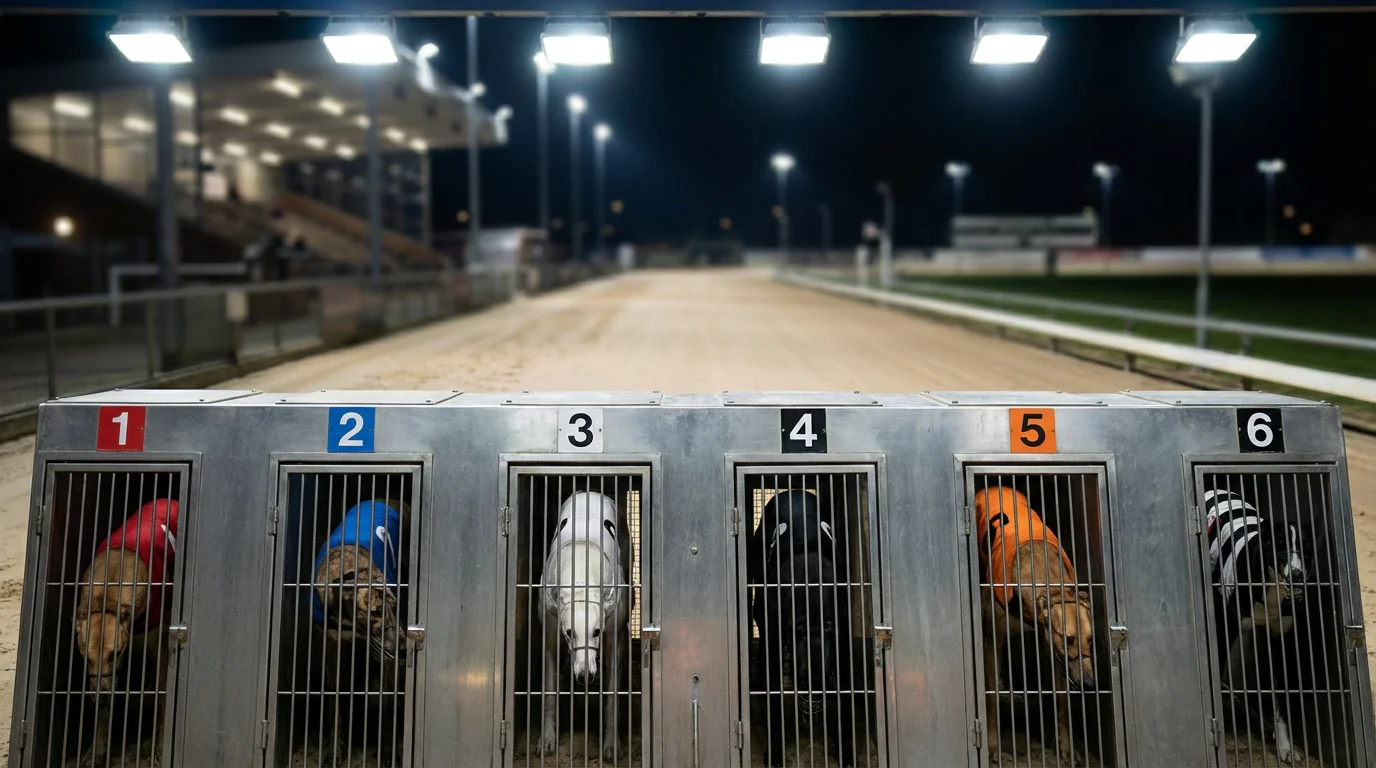
Trap bias is not a theory. It is a measurable, persistent, track-specific pattern in greyhound race outcomes that reflects the physical geometry of the circuit. At certain tracks, Trap 1 wins significantly more often than a random distribution would predict. At others, the outside traps outperform. The bias is produced by the interaction between track shape, bend radius, run-up distance, and the mechanics of how greyhounds break from the traps and navigate the first bend — and it is consistent enough over large sample sizes to be a usable betting input.
Every licensed track on the GBGB circuit has a trap bias profile. That profile varies by distance, by surface condition, and to some extent by the composition of the racing population at any given time. But the structural bias — the advantage or disadvantage conferred by the physical position of each trap relative to the track geometry — is stable because the track itself does not change. The bends are always the same radius. The run-up to the first bend is always the same length. The inside rail is always in the same place. These constants produce predictable patterns, and those patterns produce betting value for the punter who tracks them.
This guide explains what trap bias is, why it exists, how it varies across the GBGB circuit, and how to apply bias data to your own betting without falling into the trap of treating statistics as certainties.
What Trap Bias Is and Why It Exists
In a perfectly fair six-dog greyhound race, each trap would win approximately 16.7 percent of the time over a sufficiently large sample — one in six. In reality, no track produces anything close to this even distribution. Trap 1 at many UK tracks wins between 19 and 23 percent of sprint races. Trap 6 at those same tracks often wins between 12 and 15 percent. The deviation from random is not marginal. It is large enough to represent a structural advantage or disadvantage that persists across hundreds and thousands of races.
The cause is geometry. The inside trap sits closest to the running rail that curves around the first bend. A dog breaking cleanly from Trap 1 can reach the rail in one or two strides, establish position on the shortest line through the bend, and maintain that advantage through every subsequent turn. A dog breaking from Trap 6 must cross the width of the track to reach the rail, covering more ground and losing more time with every stride it takes toward the inside. If the Trap 6 dog does not reach the rail before the first bend, it runs wide, covering a longer arc and losing lengths to any dog on the inside line.
The magnitude of the bias depends on the track’s configuration. A tight track with a short run-up to the first bend amplifies the inside advantage because there is less time and distance for outside dogs to work across. A track with a long straight before the first bend reduces the bias because the field has more time to sort itself out before the geometry takes effect. Wider tracks with sweeping bends produce less extreme bias than narrow tracks with sharp turns, because the additional width allows outside runners to maintain speed through the curve rather than being forced to decelerate.
Seeding — the racing manager’s allocation of dogs to traps based on their running style — partially offsets the bias by placing natural railers in the inside traps and natural wide runners in the outside traps. The effect is to give each dog the starting position best suited to its style, which theoretically equalises the field regardless of trap position. In practice, seeding reduces the bias but does not eliminate it, because the physical advantage of the inside line is independent of the dog’s preferred style. A well-seeded wide runner in Trap 6 still has to cover more ground than a well-seeded railer in Trap 1. The maths of the bend does not care about running style.
Trap Bias Data Across the GBGB Circuit
Trap bias is not uniform across the circuit, and treating all tracks as equivalent is one of the most common analytical errors in greyhound betting. Each stadium’s geometry produces its own bias signature, and that signature varies by distance category. The patterns described here reflect the general tendencies observed across the licensed circuit, but the precise percentages fluctuate with sample period, surface condition, and the composition of the racing population. The punter who relies on trap bias data should use the most recent and track-specific figures available, not generic averages.
Sprint Distances: Where Inside Traps Dominate
Sprint races — typically 250 to 300 metres — produce the most extreme trap bias patterns in greyhound racing. The run-up to the first bend is short, the dogs hit maximum speed before they reach the curve, and the compression of six animals into the first turn creates a crowding dynamic that overwhelmingly favours the dog on the inside. At tight tracks like Romford, where the sprint distance features a very short run to the first bend, Trap 1 win rates regularly exceed 22 percent and can reach 25 percent in certain periods. Traps 5 and 6 at the same distance often sit below 14 percent.
The sprint bias is amplified by the nature of the dogs racing at those distances. Sprinters are fast-twitch animals that reach full speed in two or three strides. The trap break is the decisive phase: the dog that clears the first bend in front usually holds the lead to the line, because there are not enough bends remaining for a closer to make up the ground. The inside trap gives the fastest breaker the shortest route to the front, and on a sprint course, the front is where the race is won.
Standard and Middle Distances: The Bias Softens
At standard distances — 450 to 500 metres, covering four bends on most tracks — the trap bias remains present but less extreme. The additional race length gives the field time to separate after the first bend, and the subsequent bends allow dogs running wider lines to recover ground lost early on. Trap 1 win rates at standard distances typically sit between 18 and 21 percent across the circuit, while Trap 6 rates improve to 14 to 16 percent. The gap narrows, but it does not close.
The softening occurs because standard-distance races introduce variables beyond the first bend. A dog that emerges from the opening turn in fifth place still has three bends and a home straight in which to make up ground. Running style matters more at this distance: a confirmed closer with a strong finish can overcome an unfavourable trap draw by picking up tiring front-runners in the final hundred metres. The bias is still a factor, but it competes with other variables — form, fitness, stamina, and the pace dynamics of the specific field — in a way that sprint bias does not.
Stayers and Marathon Trips: A Different Pattern
At staying distances — 630 metres and beyond, including marathon trips of 900-plus metres at tracks like Towcester — the trap bias profile changes character. The additional bends and the longer race duration reduce the weight of the initial trap draw, and the bias that does exist tends to reflect the specific track’s bend geometry rather than a simple inside-outside gradient. At some venues, the middle traps outperform at staying distances because the dogs drawn there avoid the crowding that affects inside traps at the first bend and the wide running that costs outside traps ground through the extended series of turns.
Marathon races at Towcester, run over eight bends on the sport’s largest circuit, produce the flattest trap bias distribution on the GBGB circuit. The wide, sweeping bends and the long straights between them allow dogs from any trap to find their preferred running line within the first two hundred metres. By the midpoint of the race, the starting position is effectively irrelevant — the dog’s ability, stamina, and running style have overridden any initial positional advantage. For the punter, this means that trap draw analysis carries less weight at Towcester’s staying distances than at almost any other track-distance combination on the circuit.
Applying Bias Data to Your Betting
Trap bias data is a starting point, not a conclusion. The statistic that Trap 1 wins 22 percent of sprint races at a given track tells you that the inside trap has a structural advantage. It does not tell you that Trap 1 will win the next sprint race, and it does not tell you whether the dog drawn in Trap 1 is the right selection at the odds offered. The bias is one input in a multi-variable assessment that includes form, running style, grade, fitness, and the specific dynamics of the field assembled for that race.
The practical application is adjustment, not prediction. When you assess a race, the trap bias data adjusts the baseline probability of each runner relative to its starting position. A dog that your form analysis rates as a marginal contender gains a slight upgrade if drawn in a statistically favoured trap. A dog you rate highly takes a slight downgrade if drawn in a trap with a documented disadvantage. The adjustments are small — a percentage point or two — but over hundreds of bets, they compound into a measurable improvement in selection accuracy.
Trap bias data is most valuable when the market has not fully priced it in. Bookmakers incorporate trap position into their pricing, but they price for the average punter, not the punter who has studied track-specific bias tables by distance and condition. A dog drawn in Trap 1 at a track where the inside sprint bias is extreme may still be available at a price that understates its true probability of winning, particularly if its recent form figures are moderate and the headline numbers do not excite the casual bettor. The bias is the hidden variable — visible in the data but not always visible in the price.
Weather modifies the baseline. Wet conditions tend to amplify inside bias because a damp surface slows dogs running wide through the bends. Dry, fast conditions reduce the advantage by allowing wider runners to maintain speed on the turns. Checking the conditions before applying a static bias table is a small analytical step that most bettors skip and that improves the accuracy of the adjustment.
Bias Is a Compass, Not a Map
Trap bias tells you which direction the odds are tilted. It does not tell you where to place your money. The punter who bets Trap 1 blindly on every sprint race at a high-bias track will collect often enough to feel validated and lose often enough to erode their bankroll, because the bias is a probability shift, not a certainty. Seventeen or eighteen out of every hundred sprint races at that track will still be won by dogs drawn in the outside traps, and the losses on those races eat into the gains from the ones the bias predicted correctly.
The value of trap bias data lies in its integration with other analytical tools. It refines your pre-race assessment. It identifies races where the draw has created a structural mismatch between a dog’s ability and its starting position. It highlights situations where the market may have underpriced a positional advantage or failed to discount a positional disadvantage. These are edges, not guarantees, and the punter who treats them as edges — small, cumulative, and dependent on discipline — extracts their value over time.
Build your own bias tables. Track them by venue, distance, and season. Update them as new data accumulates. And use them as one tool among several, not as a system in themselves. The track is telling you something. The skill is knowing how much weight to give it.
Get more race analysis at greyhoundracinglegal.
Also read our greyhound trap draw and starting positions.
