

The Other Way to Bet at the Dogs
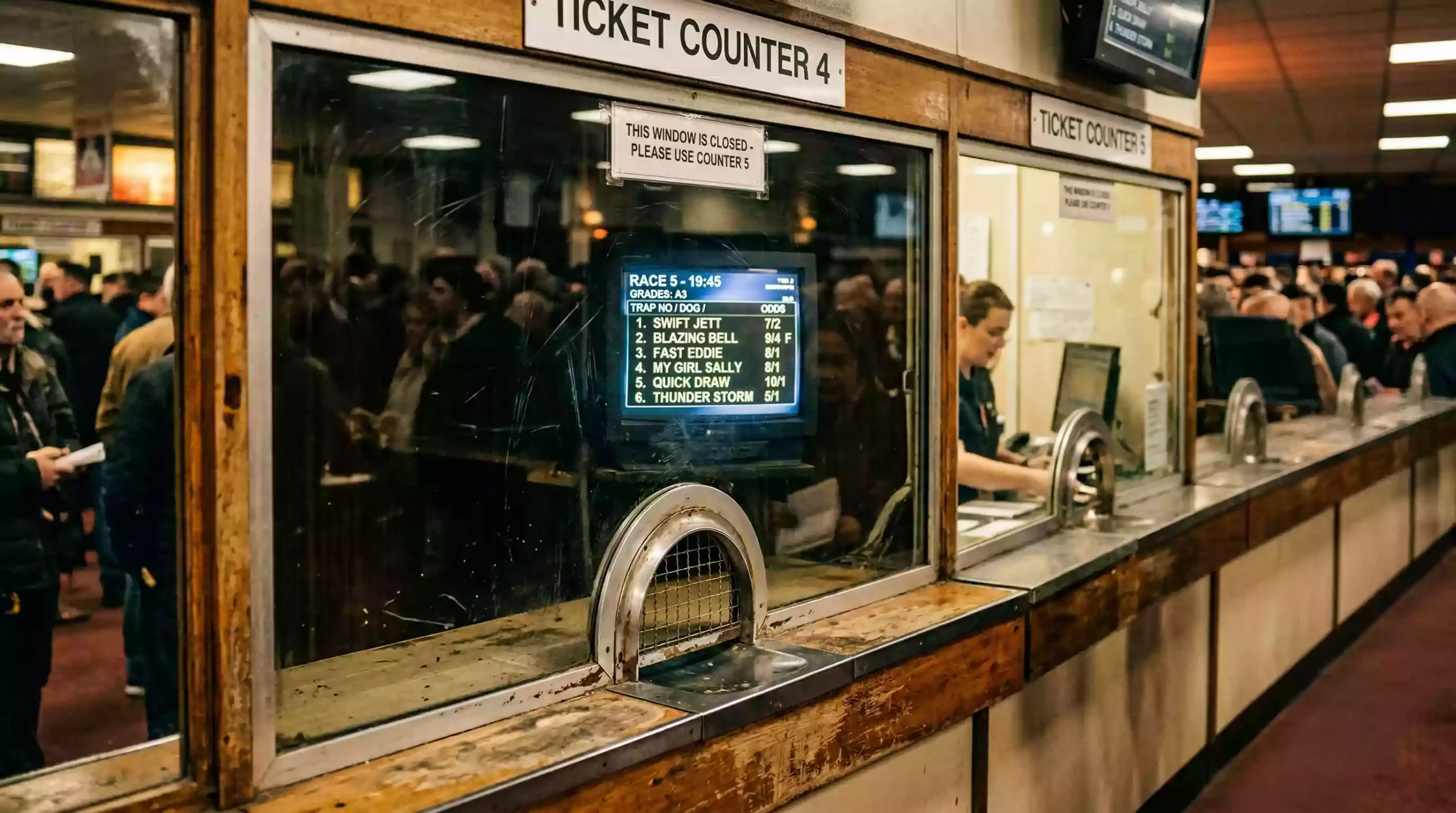
Fixed-odds betting dominates the online greyhound market, but tote betting — pool-based wagering where the payout is determined by the total money staked rather than a bookmaker’s price — remains a core part of the trackside experience and an increasingly available option through digital platforms. If you’ve placed a bet at a greyhound stadium, chances are you’ve used the tote. The windows are there, the runners are there, and the system runs on a principle that predates modern bookmaking: everyone’s money goes into a pool, and the winners share what’s left after the operator takes a cut.
Tote betting on greyhounds operates under pool betting rules, with Britbet managing pool betting operations at several UK greyhound tracks. Individual track operators are licensed by the UK Gambling Commission to accept pool bets. The structure differs from fixed-odds in important ways — ways that can work for or against you, depending on the race, the pool size, and the result.
How Tote Pools Work at Greyhound Tracks
Win Pool
The win pool is the simplest tote bet: pick the winner. All money staked on the win pool across the meeting is collected. After the race, the operator’s deduction is subtracted — typically between 15% and 25% depending on the track and pool type — and the remaining money is divided by the total staked on the winning dog. The result is the dividend, expressed per £1 staked.
A £1 dividend of £4.60 means a £2 bet returns £9.20. The minimum dividend is usually guaranteed at £1.10 per £1 staked, meaning even if a heavily backed favourite wins, you’ll receive at least a nominal return. The critical distinction from fixed odds: you don’t know your exact payout when you place the bet. The dividend is only declared after the race, once all stakes are counted and the winner is confirmed.
In practice, tote win dividends at greyhound tracks tend to be broadly comparable to the starting price. On popular favourites, the tote may pay slightly less than SP because the pool is concentrated on the short-priced dog. On outsiders, the tote can pay considerably more than SP, because fewer people backed the winner and the pool is distributed among fewer winning tickets.
Place Pool
The tote place pool pays on dogs finishing first or second in a standard six-dog race. The mechanics mirror the win pool: money in, deduction taken, remainder split among all tickets backing a placed dog. The dividend is usually lower than the win dividend, reflecting the greater probability of hitting a place. Minimum guaranteed dividends apply — typically £1.04 per £1.
Place pools are smaller than win pools, which makes them more volatile. A single large bet on one dog can distort the place dividend significantly. If £500 of a £1,000 place pool is staked on Trap 4 and that dog places, the dividend will be much smaller than if the money were spread evenly. Conversely, a place by a lightly backed outsider can produce a place dividend that exceeds the tote win dividend of the favourite — a quirk that experienced tote punters watch for.
Exacta and Tricast Pools
The tote exacta (equivalent to a straight forecast) requires naming the first two in exact order. The tote tricast requires the first three in order. Both operate as pools with the same deduction-and-divide mechanism. Because these pools attract less money overall, the dividends can be more extreme — both higher and lower — than the Computer Straight Forecast or Computer Tricast formulae used by fixed-odds bookmakers.
A popular combination in the exacta pool might pay, say, £15 per £1, while the CSF for the same result might be £22. An unlikely combination could reverse the equation entirely, with the tote paying £180 when the CSF produces £95. The variance is inherent to pool betting. The fewer people in the pool, the more any individual bet or result shifts the dividend. For punters who back longer-priced forecast combinations, the tote can offer a route to bigger dividends than fixed-odds alternatives — but the opposite is equally possible.
Tote vs Fixed Odds: When to Choose the Pool
The practical question for any greyhound punter is straightforward: should I bet through the tote or take a fixed price? The answer depends on what you’re betting, how much you’re staking, and the size of the pool.
For win bets on favourites, fixed odds almost always deliver a better or equivalent return. The tote win pool tends to compress dividends on short-priced dogs because the majority of the pool is concentrated on them. Taking a fixed price at 2/1 or 5/2 guarantees your return regardless of how much other money flows onto the same dog.
For win bets on outsiders, the tote can be more generous. If you’ve identified a dog at 10/1 that the market has largely ignored, the tote dividend may exceed the fixed-odds SP because the pool isn’t heavily weighted toward that selection. This advantage is most pronounced in smaller pools — afternoon meetings, midweek fixtures — where the pool composition is less predictable.
For forecast and tricast bets, the comparison is race-by-race. There’s no consistent edge either way. Some punters place both a tote exacta and a fixed-odds forecast on the same race, then settle whichever pays better (where bookmaker rules permit). Others default to the tote for forecasts because the upside in thin pools can be significant. The downside — a lower-than-expected dividend when a popular combination lands — is the trade-off.
Stake size also matters. In a pool of £2,000, a £100 bet represents 5% of the total pool and will visibly depress your own dividend. In a pool of £20,000, the same bet barely registers. Large-stakes tote punters need to be aware of their own impact on the pool, particularly at smaller meetings.
Jackpot and Accumulator Pools
Many UK greyhound tracks offer tote jackpot pools, which typically require you to select the winner of six consecutive races. The jackpot pool accumulates until it’s won, creating rolling prize funds that occasionally reach four or five figures. The minimum stake is usually £1, and the difficulty of selecting six consecutive winners means the pool frequently carries forward.
The appeal is obvious: a £1 ticket can return thousands of pounds. The maths, however, is sobering. Six consecutive winners in six-dog races represents one outcome from 46,656 possible combinations (6 to the power of 6). Even accounting for favourites and form, the probability of landing a jackpot is extremely low on any individual night. Jackpot pools are entertainment-grade bets — the lottery of the trackside — and should be treated as such.
Some tracks also offer Pick 4 or Scoop 6 variants, where the number of races or the pool structure differs. Rules vary by venue, and the terms are displayed at the tote windows and on the track’s website before racing begins.
The Pool Has No Memory
Tote betting on greyhounds carries one philosophical advantage over fixed odds: the price you get is determined by the crowd, not by a bookmaker’s risk model. When the crowd is wrong about a dog’s chances, the tote dividend can be exceptionally generous. When the crowd is right, the dividend compresses. There’s a democratic logic to it, even if the outcome is less predictable than a fixed price.
The practical takeaway is simpler. Use the tote for forecast bets in thin pools, where the upside is largest. Use fixed odds for win bets on short-priced dogs, where certainty of return matters. And if the jackpot pool is carrying forward from three rollovers and you’re at the track with a spare £2 — well, someone has to win it eventually.
Find more bet type guides at greyhoundracinglegal.
Also read our forecast and tricast bets.
