
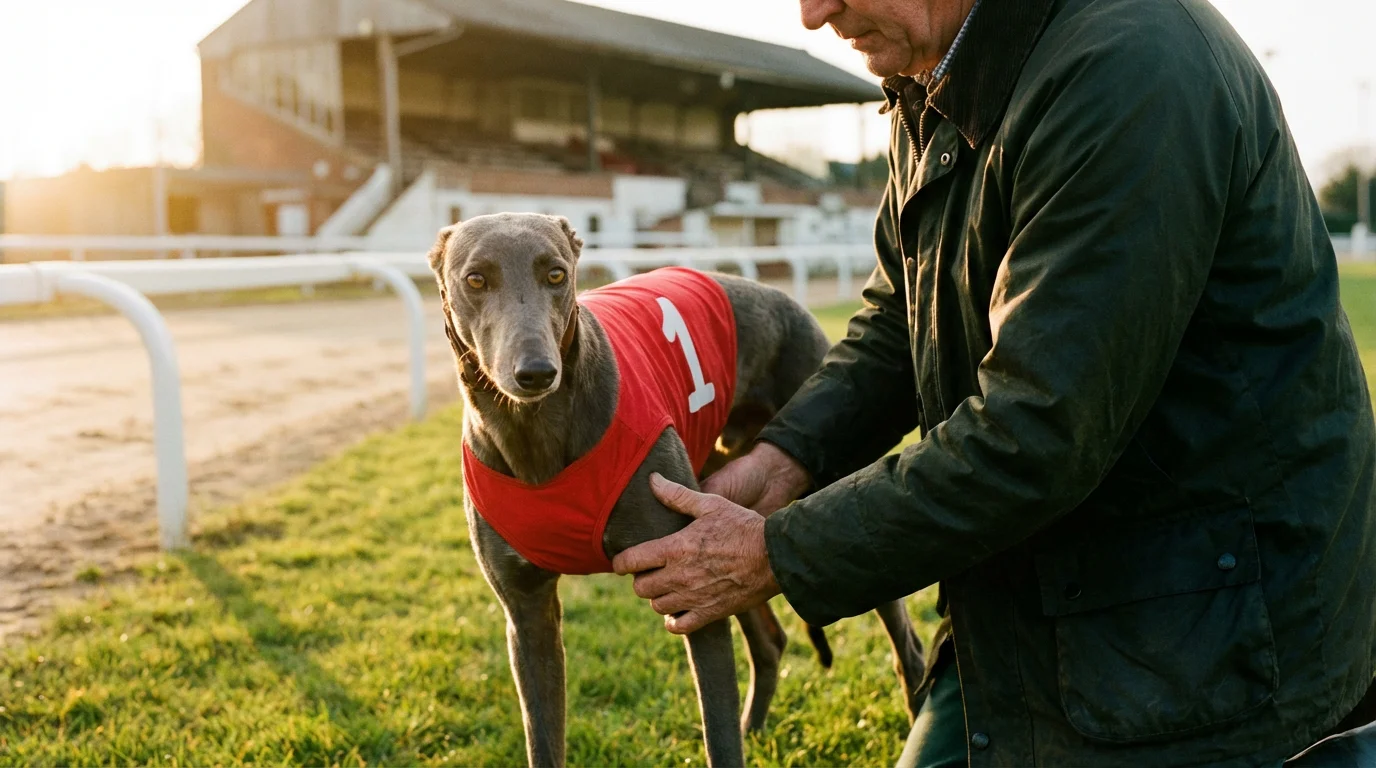
Welfare Is the Price of a Licence
Racing greyhounds in Britain are not protected by goodwill. They are protected by statute, by a self-regulatory code that ties kennel standards to track licensing, and by an injury reporting system that publishes data the sport’s critics use as ammunition and its defenders cite as proof of transparency. The welfare framework around UK greyhound racing is more comprehensive than it has ever been — and more scrutinised than at any point in the sport’s century-long history.
The foundation is the Welfare of Racing Greyhounds Regulations 2010, a piece of secondary legislation that imposed specific duties on track operators for the first time. Before 2010, welfare provisions existed within the Greyhound Board of Great Britain’s own rules, but they lacked statutory force. The 2010 Regulations changed that by giving local authorities enforcement powers, mandating veterinary attendance at licensed meetings, and creating a framework under which tracks could be penalised — not just by their governing body, but by the state — for failing to meet defined welfare standards.
Above the statutory baseline sits the GBGB’s own welfare code, which goes further in several areas: kennel inspections, retirement tracking, and the Greyhound Retirement Scheme that the Board operates in partnership with rehoming charities. The dual structure — law at the bottom, self-regulation on top — creates a system that looks robust on paper. Whether it functions robustly in practice is the question that welfare campaigners, parliamentary committees, and the sport’s own stakeholders continue to argue over.
For the punter, welfare regulation is not a peripheral concern. It determines the conditions under which dogs race, the integrity of the form data those races produce, and — increasingly — whether the sport will continue to operate at all.
The 2010 Regulations: What the Law Actually Requires
The Welfare of Racing Greyhounds Regulations 2010 were introduced under powers granted by the Animal Welfare Act 2006. They apply to every greyhound racing track in England — licensed by the GBGB or not — and they impose obligations enforceable by local authority inspectors, not just by the sport’s own officials. That distinction matters. A GBGB steward enforcing the Board’s internal rules is an industry employee policing industry behaviour. A council inspector enforcing statutory regulations is the state exercising a legal power.
The regulations require track operators to ensure that a veterinary surgeon is present throughout every race meeting, with the authority to withdraw any dog deemed unfit to race. They require that racing greyhounds are identified by microchip and that records of those identifications are maintained. They mandate that the track operator makes provision for the care and treatment of any greyhound injured during a race, and that the outcome of that treatment is recorded.
Statutory Obligations on Track Operators
The operator’s duty extends beyond race-day welfare. Under the 2010 Regulations, track operators must maintain a register of all greyhounds racing at the venue, recording their identity, their trainer, and their racing history. They must ensure that no greyhound races more frequently than the regulations permit, and they must report serious injuries to the local authority. The reporting obligation created, for the first time, an external audit trail for greyhound injuries — one that sits outside the sport’s own governance and is accessible through freedom of information requests.
Non-compliance carries consequences. Local authorities can issue improvement notices, and persistent failure to meet the statutory standard can result in prosecution under the Animal Welfare Act. In practice, prosecutions have been rare. The GBGB’s own compliance mechanisms tend to catch problems before they reach the statutory enforcement threshold, and the relationship between tracks and local inspectors is generally cooperative rather than adversarial. Critics argue that this cooperative dynamic blunts the regulatory edge. Defenders argue that it produces better outcomes than confrontation.
Veterinary Presence and Race-Day Protocols
The requirement for a veterinary surgeon at every meeting is the single most consequential welfare provision in the 2010 Regulations. Before the statutory mandate, veterinary attendance was a GBGB rule but not a legal obligation. The distinction mattered at independent tracks, where the GBGB’s writ did not run and veterinary cover was inconsistent.
On race day, the attending vet conducts a pre-race inspection of every dog, assessing physical condition, soundness, and fitness to compete. Dogs that fail the inspection are withdrawn. During racing, the vet monitors from a position with clear sightlines and responds to any injury immediately. Post-race, every dog passes through a veterinary check before leaving the track. The protocol is designed to ensure that injuries are identified, treated, and recorded at the point they occur, rather than discovered later in the kennel when the evidence of cause is less clear.
The quality of veterinary oversight varies, as it does in any system that depends on individual professionals operating under time pressure. A vet assessing sixty dogs across twelve races in an evening is working at pace, and the thoroughness of each inspection is inevitably constrained. The GBGB supplements on-track veterinary care with a network of approved practices for follow-up treatment, but the race-day assessment is the critical intervention point — the moment when a decision to withdraw a dog can prevent a racing injury rather than treat one.
Kennel and Track Standards Under GBGB Oversight
The GBGB’s kennel licensing scheme operates above the statutory floor. Every trainer on the licensed circuit holds a GBGB licence, and that licence is conditional on meeting kennel standards that the Board inspects at least annually. The inspections cover the physical condition of the facility — space per dog, bedding, ventilation, drainage, access to outdoor exercise areas — and the management practices of the trainer: feeding records, veterinary treatment logs, and the documentation that links each dog in the kennel to its racing and retirement history.
Kennel inspections are conducted by GBGB-appointed welfare liaison officers, and the reports feed into the trainer’s licensing review. A trainer whose kennel fails inspection faces a remediation period with a follow-up visit, and repeated failure can result in licence suspension or revocation. The system creates a direct connection between welfare compliance and the right to operate commercially: a trainer who cannot meet the kennel standard cannot train dogs for the licensed circuit, which is where the prize money and the betting market exist.
Track standards are governed separately. Each licensed stadium must meet facility requirements covering the racing surface, the kennel block at the track, the parade ring, the veterinary treatment area, and the safety infrastructure — catching pens, rail padding, and surface maintenance equipment. The GBGB conducts annual track inspections and can impose conditions on a stadium’s licence if deficiencies are identified. A track that fails to maintain its surface to the required standard may be required to reduce its fixture frequency or invest in drainage improvements before the licence is renewed.
The connection between track conditions and dog welfare is direct and measurable. A poorly maintained sand surface produces more injuries. A catching pen that is too short or too hard increases the risk of post-race collisions. Rail padding that has degraded absorbs less impact. These are engineering problems with engineering solutions, and the GBGB’s track inspection regime is designed to identify them before they produce harm.
The Greyhound Retirement Scheme sits at the end of the welfare pipeline. The GBGB requires trainers to account for every dog that leaves their kennel, recording whether the dog has been rehomed, transferred to another trainer, or euthanised. The scheme works in partnership with charities including the Greyhound Trust, which operates a network of rehoming branches across the country. Retirement data is published annually, and the proportion of racing greyhounds successfully rehomed has increased steadily — a statistic the industry highlights and that campaigners argue still leaves too many dogs unaccounted for.
Injury Tracking and the Data That Drives the Debate
The GBGB publishes injury and fatality data annually, and those numbers sit at the centre of the welfare argument. The Board’s reports record the total number of racing injuries, categorised by severity, alongside the number of dogs that died or were euthanised as a direct result of racing. The data covers the licensed circuit only — independent tracks have no obligation to report — and it provides the most detailed picture available of the physical cost of greyhound racing in Britain.
The numbers are contested from both sides. Animal welfare organisations, particularly the League Against Cruel Sports and the RSPCA, cite the injury totals as evidence that the sport is inherently harmful regardless of regulatory improvements. They point to the cumulative toll: thousands of injuries per year across the circuit, with a proportion resulting in euthanasia at the track. The GBGB counters that the per-race injury rate has declined as welfare standards have tightened, that the majority of injuries are minor and treatable, and that the transparency of the data itself demonstrates the sport’s commitment to accountability.
For the punter, injury data serves a dual purpose. On the analytical level, track-specific injury rates can indicate surface quality and maintenance standards — useful context when assessing which venues produce the most reliable form. On the political level, the injury debate feeds directly into the legislative environment that threatens the sport’s future. The Welsh Government’s Prohibition Bill cited injury statistics in its explanatory memorandum. If those numbers do not continue to improve, the case for extending prohibition to England strengthens.
The data also reveals patterns that the headline figures obscure. Sprint races, where dogs accelerate to maximum speed and enter the first bend at pace, carry more risk than longer races where the field spreads before the bends. Tight tracks with sharp bends produce more contact injuries than larger ovals with sweeping curves. These patterns are knowable and, in theory, actionable — a governing body that took track design seriously as a welfare variable could mandate configuration changes. Whether the economics of the sport allow that level of infrastructure investment is another question entirely.
Standards Don’t Set Themselves
The welfare framework around UK greyhound racing is a product of pressure — political pressure, public pressure, and the commercial pressure of a sport that knows its social licence depends on demonstrable care for the animals at its centre. The 2010 Regulations did not emerge from an industry volunteering to regulate itself more stringently. They emerged because the alternative — a sport operating without statutory welfare standards while public attitudes shifted against it — was politically unsustainable.
The same dynamic applies today. The GBGB’s welfare code, its kennel inspections, its retirement tracking, and its published injury data all exist in a context where the sport’s opponents are organised, funded, and legislatively successful. The Welsh ban is not a theoretical threat. It is a Bill progressing through a parliament. The welfare standards that the industry maintains are, in part, a defence against further legislative action — evidence presented to politicians and the public that the sport takes its responsibilities seriously enough to deserve continued operation.
Whether that defence holds depends on the data. If injury rates continue to fall, if rehoming numbers continue to rise, and if the regulatory framework continues to tighten in response to genuine evidence rather than political expedience, the industry’s position is defensible. If the numbers plateau or worsen, the political arithmetic shifts. The welfare regulations are not static. They are a moving standard, and the sport’s future depends on whether that standard moves fast enough to stay ahead of the opposition.