

The Dog Is Out — Now What Happens to Your Bet
A non-runner in greyhound racing is a dog that has been withdrawn from a race after the betting market has opened. It happens regularly — dogs are withdrawn for injury, illness, season (in the case of female greyhounds, as covered by GBGB Rule 56), or at the trainer’s discretion (under GBGB Rule 69A). When it does, a chain of consequences follows that affects every bet placed on that race, not just bets on the withdrawn dog.
The rules governing non-runners in greyhound betting are broadly consistent across UK-licensed bookmakers, but the details vary enough that assumptions are dangerous. Whether you get a refund, what happens to your forecast, and how the remaining runners’ odds are affected all depend on the type of bet you placed and the specific terms of your bookmaker. Understanding these rules before you need them is the practical discipline — discovering them after your dog is withdrawn is the expensive lesson.
Non-Runner Refund Rules
Win and Each-Way Bets
If you’ve placed a win or each-way bet on a specific named greyhound and that dog is declared a non-runner, the standard rule across UK bookmakers is a full refund of your stake. The bet is treated as void. Your money is returned, and the bet is settled as though it never existed. This applies whether you took an early price or bet at SP — the non-runner declaration cancels the wager.
The refund is automatic at online bookmakers. The voided bet will appear in your transaction history with a “non-runner” or “void” label, and the stake will be credited back to your account. At the track, tote bets on a non-runner are refunded at the window. If you placed with an on-course bookmaker, the refund process depends on when the withdrawal was declared — before or after the race — and may require presenting your betting slip.
The timing of the non-runner declaration matters for price movements. When a dog is withdrawn, the remaining dogs’ prices are typically adjusted. The favourite may shorten, and the non-runner’s “share” of the market is redistributed. If you’ve already taken a price on one of the remaining dogs, that price stands — it isn’t adjusted downward to reflect the reduced field. This can work in your favour: if the non-runner was a fancied dog and its withdrawal strengthens the chances of your selection, your original price suddenly represents better value against the revised market.
Accumulator and Multiple Bets
In accumulators, a non-runner doesn’t void the entire bet. Instead, the selection is removed and the bet is recalculated as though it never included that leg. A four-fold accumulator becomes a treble. A double becomes a single. The non-runner leg is settled at odds of 1/1 (evens), meaning it neither adds to nor subtracts from the accumulator — it simply passes through.
This is important for punters who build multi-race greyhound accumulators. A non-runner in one race reduces your potential return (because you lose one multiplying leg) but doesn’t destroy the bet. The remaining selections still need to win for the bet to pay out. If you’ve built a five-fold and two dogs are withdrawn, you’re left with a treble — still alive, but at substantially reduced odds.
Trap Betting and Reserve Dogs
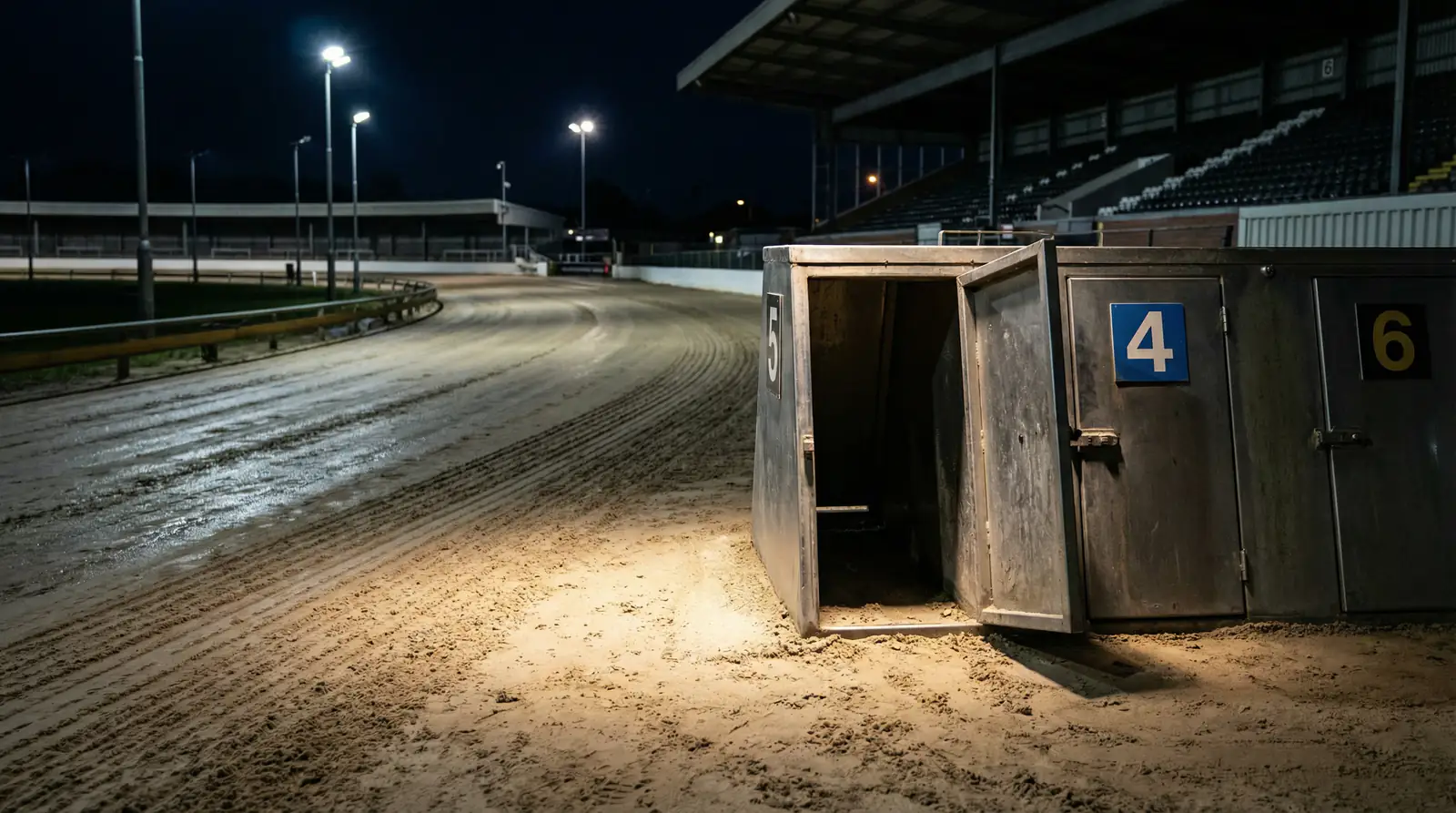
Trap betting introduces a critical distinction. When you bet on a trap number rather than a named dog, the non-runner rules change significantly. If a dog is withdrawn and its trap is left vacant, most bookmakers settle trap bets on that number as losers — not as non-runners. The reasoning is that you bet on the trap, not the dog, and the trap ran (it just happened to be empty).
However, if a reserve dog is substituted into the withdrawn dog’s trap, the situation shifts again. Your trap bet now applies to the reserve dog. If the reserve wins, your trap bet wins. If the reserve loses, your trap bet loses. There’s no refund because the trap was occupied — the dog running in it just wasn’t the one originally declared.
This distinction catches punters out regularly. If you intended to back a specific dog and did so by selecting its trap number rather than its name, a withdrawal and reserve substitution means your money is now riding on a different animal entirely. The lesson is straightforward: if you want to back a dog, back the dog by name. If you want to back a position, understand that the occupant of that position may change.
Reserve dogs themselves introduce another layer of uncertainty. A reserve is a dog held in readiness to replace a withdrawal (as governed by GBGB Rule 67), and it may or may not be competitive in the grade it’s entering. Reserves are typically drawn from the same meeting’s pool of available dogs but may not have been originally entered for that specific race. Their form at the race distance, their trap preference, and their grade suitability are all unknowns to a greater or lesser degree. When a reserve is inserted, the form analysis for that race changes materially — and the market usually adjusts, often making the reserve a drifter in the pre-race market.
Void Races
A race can be declared void in its entirety if certain conditions are met, as set out in GBGB Rule 145. The most common triggers are a fault with the hare mechanism (the lure fails to operate correctly), interference that the stewards consider unfair to the field, or a situation where multiple dogs fail to complete the course. When a race is voided, all bets on that race are refunded — win, each-way, forecast, tricast, tote, accumulators, everything.
For accumulator purposes, a void race is treated the same as a non-runner: the void leg is removed, and the remaining legs carry on. A four-fold with one void race becomes a treble.
Void races are uncommon at licensed tracks — the GBGB’s track standards and equipment maintenance requirements are designed to prevent them — but they do occur. A mechanical failure with the hare is the most frequent cause (governed by GBGB Rule 132). Electrical faults, extreme weather conditions, or track damage can also trigger a void declaration. The stewards’ decision to void a race is final and not subject to appeal by bookmakers or punters.
One edge case worth noting: a race where the hare mechanism malfunctions but the dogs still complete the course may or may not be voided, depending on whether the stewards judge the malfunction materially affected the result. These decisions are made on a case-by-case basis, and the waiting period between the race finishing and the stewards’ ruling can be tense for punters with money on the outcome.
Know the Rules Before the Traps Open
Non-runner rules are one of those areas of betting that feel like administrative details until they directly affect your money. A withdrawn favourite, a reserve substitution, a voided race — each triggers a specific set of consequences that you either understand in advance or discover at cost.
The core principles are simple: named-runner bets on non-runners are refunded; trap bets on empty traps are not. Accumulators lose a leg but survive. Void races refund everything. Beyond those principles, the specifics sit in your bookmaker’s terms and conditions, and the five minutes you spend reading them before your first bet of the evening will save you more confusion than any post-race complaint to customer service.
Find more betting rules at greyhoundracinglegal.
Also read our GBGB rules of racing explained.
