
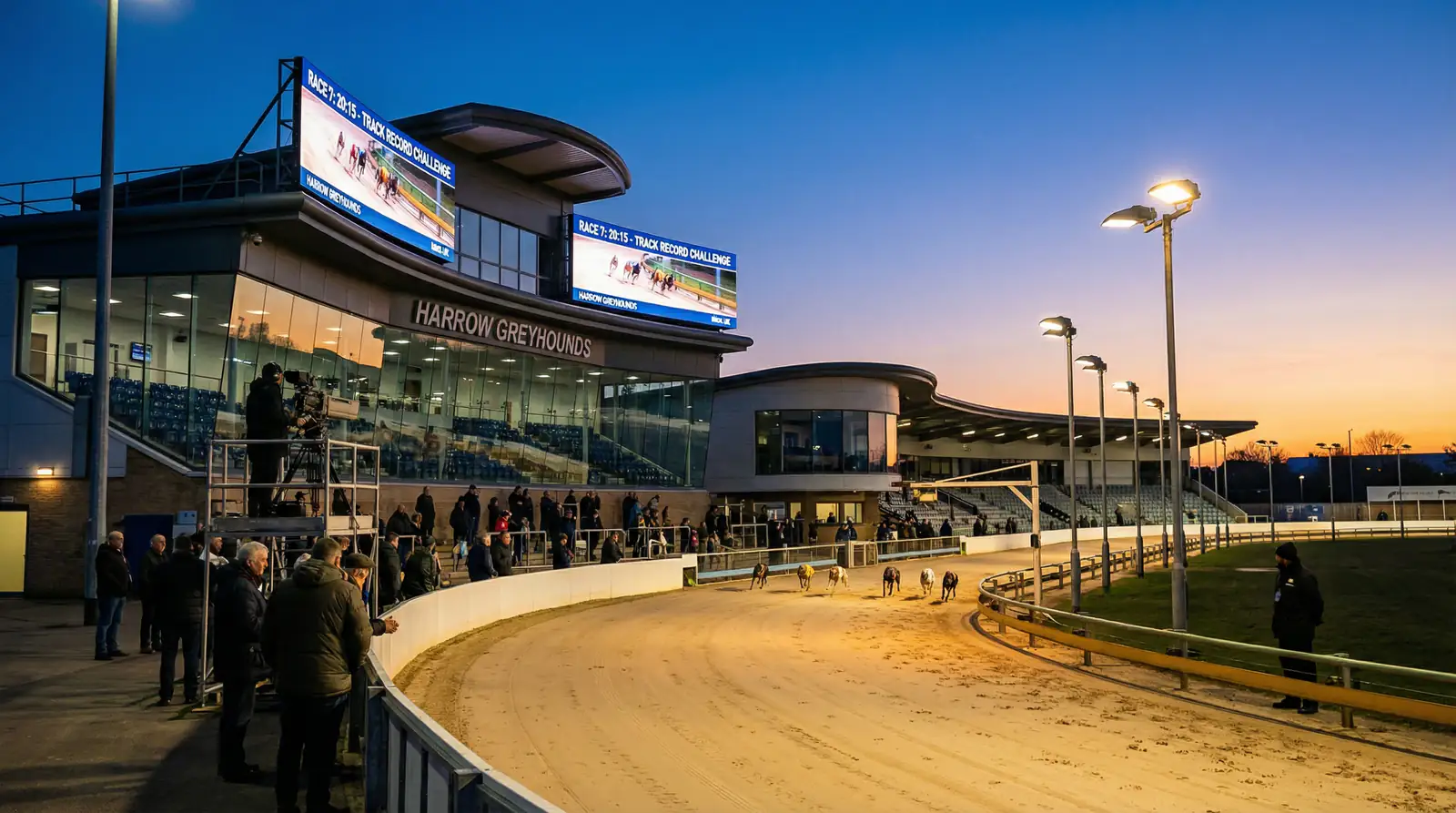
Smaller, Tighter, and Fighting on Every Front
UK greyhound racing enters 2026 as a sport in contraction. The number of licensed tracks is lower than at any point in the sport’s century-long history. Attendances have fallen. The political environment is hostile in Wales and Scotland and indifferent at Westminster. Track closures continue to outpace openings at a rate that makes the long-term trend unmistakable: the sport is shrinking, and the pace of that shrinkage is not slowing.
And yet the sport survives. It survives because the betting product it generates — frequent races, small fields, fast turnover — remains commercially valuable to the bookmaking industry. It survives because live streaming has decoupled the product from physical attendance, allowing punters across the country to watch and bet on races at tracks they’ve never visited. It survives because the dogs still run, the punters still bet, and the economics, while strained, have not collapsed entirely.
The question is not whether greyhound racing will exist in five or ten years. It almost certainly will. The question is what form it will take, how many tracks will remain, and whether the product available to bettors will resemble what exists today or something diminished beyond recognition.
Legislative Threats and Political Pressure
The legislative landscape has shifted against greyhound racing more decisively in the past five years than in the previous fifty. Wales has introduced a bill to ban the sport within its borders. Scotland has introduced legislation to prohibit greyhound racing. Campaign groups with professional lobbying operations are pressing Westminster to consider a UK-wide ban, and the political capital required to defend greyhound racing is higher than the sport’s diminished cultural footprint can easily generate.
The industry’s response has been to emphasise welfare improvements: better kennel standards, transparent injury data, higher rehoming rates, independent oversight through UKAS accreditation. These measures are real and represent genuine progress. But they operate on a political timeline that may be shorter than the reforms require. Welfare improvements take years to implement and even longer to shift public perception. A single investigative report exposing mistreatment at a licensed track could undo years of positive messaging in a single news cycle.
The precedent set by Wales — banning greyhound racing in a nation without active tracks — is politically significant even if its practical impact is zero. It establishes the principle that a UK legislature can prohibit the sport, and it provides a template that other legislatures can follow. If Scotland enacts similar legislation, the pressure on England intensifies. The GBGB’s licensed tracks, nearly all in England with one in Wales, would be the sport’s last regulated footprint — a concentration that makes it politically easier to target and economically harder to defend.
For bettors, the legislative risk doesn’t affect tonight’s race card. But it does affect the medium-term viability of the sport on which you’re wagering. A smaller sport means fewer races, thinner markets, and reduced competition between bookmakers for your greyhound business. The trajectory matters even if the destination is uncertain.
Economics and Track Viability
Greyhound tracks in the UK face a set of economic pressures that have already closed dozens of venues and continue to threaten the survivors. The core challenge is land value. Most greyhound stadiums occupy large sites in urban or suburban areas where the land is worth significantly more as residential or commercial development than it is as a racing venue. When a track’s owner — or a property developer who has acquired it — calculates the return from selling the site versus the return from operating the stadium, the numbers rarely favour continued racing.
Wimbledon, which closed in 2017, is the highest-profile example of this dynamic, but it is far from unique. Tracks across the country have closed for the same reason: the land beneath them became more valuable than the sport above it. The remaining 18 GBGB-licensed tracks survive because their sites either carry less development value, because their operators are committed to racing for non-financial reasons, or because planning constraints prevent redevelopment. None of these protections is permanent.
Revenue from betting sustains the tracks that remain. The British Greyhound Racing Fund collects a voluntary levy from bookmakers based on their greyhound betting turnover, and this money is distributed to tracks and to welfare programmes. The industry has repeatedly argued that the levy is insufficient and that a statutory levy — mandatory rather than voluntary — would provide a more stable funding base. The UK Government has declined to impose one, leaving the funding arrangement dependent on the betting industry’s continued willingness to contribute.
Track operating costs — staffing, maintenance, veterinary provision, regulatory compliance — have risen steadily. Prize money has not kept pace, which reduces the incentive for owners and trainers to keep dogs in training. A smaller dog population means fewer competitive fields, which degrades the quality of the racing product, which in turn reduces the betting turnover that funds the entire system. The loop is self-reinforcing, and breaking it requires either a significant increase in revenue or a significant reduction in costs — neither of which is straightforward.
The Online and Streaming Lifeline
If there is a growth story in UK greyhound racing, it is online. The shift from trackside attendance to remote viewing and betting has fundamentally changed the economics of the sport’s audience. A track that might draw 500 spectators on a Tuesday evening now reaches tens of thousands of online viewers through bookmaker streaming platforms. The betting turnover generated by those remote viewers exceeds what the physical attendance could produce, and the trend is toward further growth in online engagement even as physical attendance declines.
Live streaming, delivered through SIS and bookmaker apps, has made greyhound racing a genuinely national product for the first time in decades. A punter in Newcastle can follow every race at Crayford. A shift worker can bet on a 14:30 BAGS meeting on a phone during a break. The barriers to access have effectively disappeared, and the sport’s daily fixture density — races running from mid-morning through to late evening — positions it as a continuous content stream that few other sports can match.
The BAGS model, which schedules racing specifically for the betting market, is the commercial engine of this strategy. BAGS fixtures are designed to fill gaps in the bookmakers’ content schedule, ensuring there’s always a race starting somewhere. For the betting industry, greyhound BAGS coverage provides low-cost, high-frequency content that drives customer engagement between the bigger sporting events. For the tracks, BAGS fees represent a reliable revenue stream that underpins their operating budgets.
Whether this model is sustainable long term depends on factors outside the sport’s control. If the betting industry consolidates further, the bargaining position of individual tracks weakens. If regulatory changes reduce gambling advertising or restrict betting products, the turnover that funds BAGS fixtures could contract. The streaming lifeline is real, but it connects the sport’s survival to the health and regulatory treatment of the gambling industry — a dependency that introduces its own risks.
What Remains When the Grandstands Empty
UK greyhound racing’s future is a story of compression. Fewer tracks, fewer dogs, fewer spectators — but a betting product that retains commercial value because of its frequency, its accessibility, and the genuine skill involved in analysing six-dog fields. The sport will not disappear, but it will continue to change, driven by economics, politics, and technology in proportions that no one can predict with confidence.
For punters, the practical implication is to pay attention to the industry’s trajectory as well as the form book. The tracks you bet on today may not all be there in ten years. The regulatory environment that guarantees fair markets and consumer protection may tighten. The quality and variety of the racing programme may contract. None of this is a reason to stop betting on greyhound racing in 2026 — the product is live, the markets are active, and the opportunities for skilled punters are real. But the landscape is shifting, and the punters who last longest in any market are the ones who watch the horizon as well as the next race.